
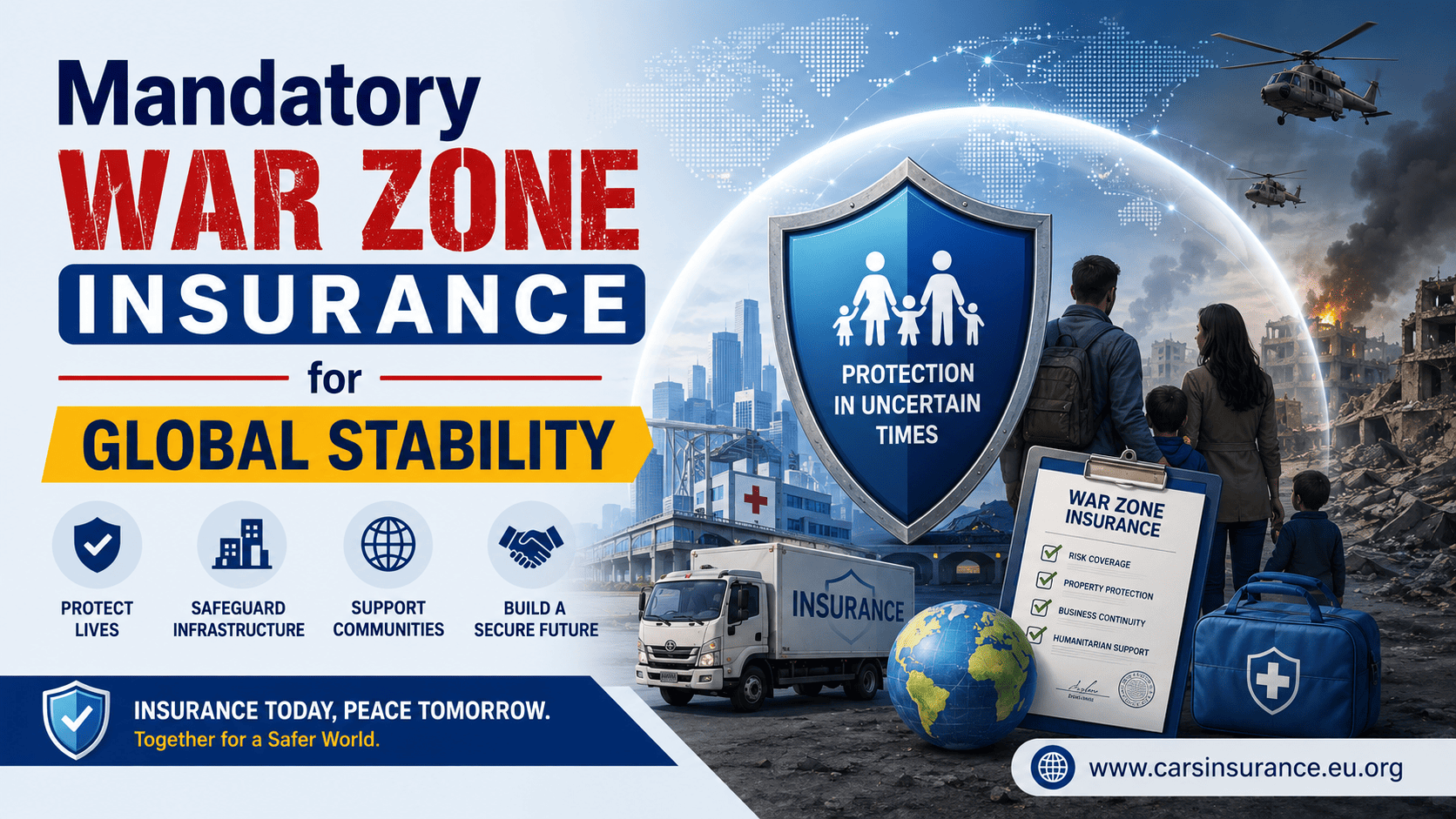
War disrupts lives, economies, and stability, making insurance essential. In conflict zones, traditional policies often fail to cover war-related risks. Mandatory war insurance ensures financial protection for individuals and businesses. This article explores its necessity, benefits, and implementation challenges.
Understanding War Zone Insurance
War zone insurance covers damages from armed conflicts, terrorism, and political unrest. Standard policies exclude war-related losses, leaving victims vulnerable. Specialized coverage includes property damage, medical expenses, and evacuation costs. Governments and insurers must collaborate to enforce such policies.
Why War Insurance Should Be Mandatory
Mandatory insurance spreads risk across populations, reducing individual financial burdens. It ensures victims receive compensation without relying on volatile aid. Countries like Israel have implemented similar systems successfully. Universal adoption could stabilize post-conflict recovery efforts globally.
Key Benefits of Mandatory War Insurance
Financial security tops the list, shielding families from crippling losses. Businesses can rebuild faster, preserving jobs and economies. Insurers gain structured frameworks to assess war risks. Governments mitigate refugee crises by supporting displaced citizens financially.
Challenges in Implementing War Insurance
High premiums deter affordability in war-prone regions. Insurers fear unsustainable claims during prolonged conflicts. Political instability complicates policy enforcement. Solutions include subsidies, international reinsurance pools, and phased implementation strategies.
Global Examples of War Insurance
Israel’s “Property Tax and Compensation Fund” covers war damages. The UK’s “Pool Re” insures terrorism-related losses. These models prove feasibility. Adapting them globally requires tailored approaches based on regional risks and economic conditions.
The Role of Governments and Insurers
Governments must legislate mandatory coverage and provide oversight. Insurers should develop scalable, affordable products. Public-private partnerships can bridge gaps. Transparency in claims processing builds trust among policyholders.
Ethical Considerations
Making insurance compulsory raises ethical questions. Critics argue it penalizes vulnerable populations. However, exemptions for low-income groups and sliding-scale premiums can ensure fairness. Ethical frameworks must guide policy design.
Technological Solutions for War Insurance
Blockchain ensures transparent claims processing. AI predicts conflict risks, adjusting premiums dynamically. Mobile platforms expand access in remote areas. Technology can revolutionize war insurance efficiency and reach.
Conclusion
Mandatory war zone insurance is a pragmatic solution for modern conflicts. It balances financial protection with collective responsibility. While challenges exist, collaborative efforts can make it viable. The world must prioritize preparedness in an era of uncertainty.
Call to Action
Advocate for war insurance policies in your region. Support initiatives promoting financial resilience in conflict zones. Stay informed about global risk management strategies. Together, we can build a safer, more secure future.